Esports broadcast production: how it works
An esports broadcast combines a sports-style live production with game feeds that do not exist outside the game. This guide explains the building blocks, the crew and the decisions that matter when you produce a tournament for an international or local-language audience.
Updated 23 November 2026 · by the Zsight production team
What an esports broadcast is made of
Every esports broadcast has the same layers, whatever the game:
- Game feed: what viewers see of the match, controlled by observers who choose the camera inside the game.
- Casters and analysts: the voices that explain the match, working from a desk or a studio.
- Graphics: overlays for scores, player stats, brackets and sponsors, fed by data from the game or the tournament platform.
- Replays and highlights: operators who cut moments during the match for use in breaks and between maps or rounds.
- Audio: caster microphones, crowd sound and the mix that goes to the stream and to the arena.
- Production control: a director, a producer and a technical team that cue everything and talk to everyone on comms.
- Distribution: encoding and delivery to streaming platforms, plus any feed that goes to the arena screens.
The crew
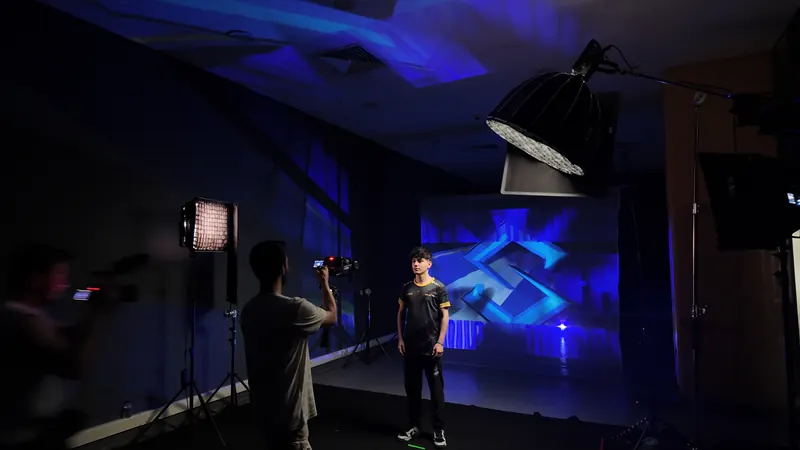
The number of people depends on the scale, but the roles are consistent: executive producer, show producer, director, technical director, graphics operator, replay operator, observer and observer producer, audio engineer, camera operators for the stage, stage manager, casters and analysts, and a person responsible for distribution and platform health.
A single producer should own the connection between the broadcast and the competition team, because match timing and technical pauses affect the show minute by minute.
Local-language broadcast
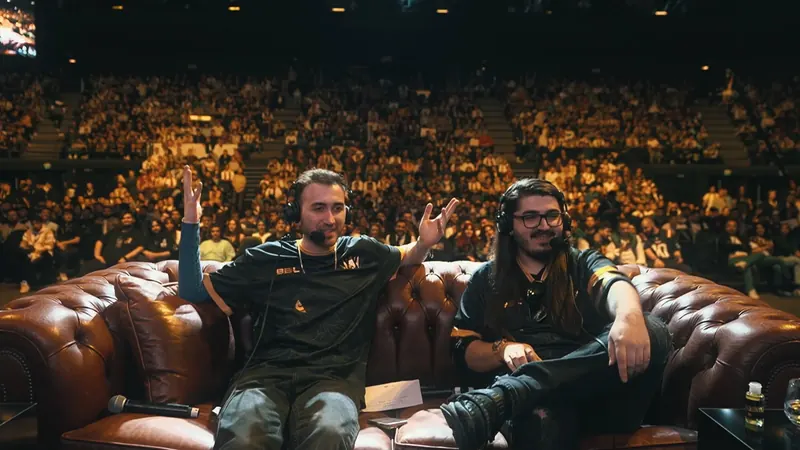
Many publishers provide an international English feed and rely on local partners to produce broadcasts in other languages. A local-language broadcast does not simply replace the voices. It needs translated overlays, casters and analysts who know the scene and the teams, and a producer who can adapt the show to local viewing habits.
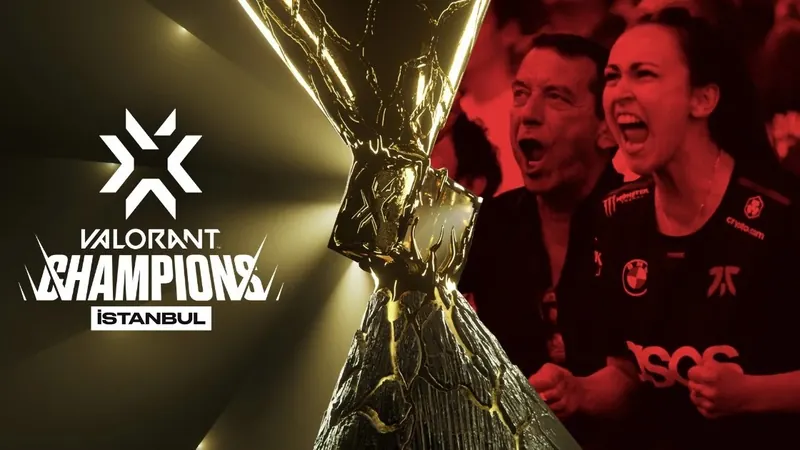
Zsight produced the Turkish-language broadcast of the VALORANT Champions 2022 finals in Istanbul, which reached 1.4M+ peak viewers worldwide. It has also produced Turkish-language and local broadcasts for FACEIT and Moonton events, and the broadcast of PUBG Mobile Super League Europe 2025 Fall.
Delay, fairness and redundancy
Live broadcasts of competitive matches usually carry a delay so that teams or their followers cannot use the stream to gain information during a match. The publisher or tournament organiser defines the delay and which feeds are allowed in the player area.
Redundancy protects the show. Typical measures are duplicated encoders, a second internet connection from a different provider, backup power for the broadcast compound, and a recorded version of the programme that can go out if the live feed fails.
Rights, approvals and platforms
Before a broadcast starts, confirm who owns the rights to the match, which platforms may carry it, whether sponsor categories conflict with the publisher's partners and how the publisher approves graphics and talent. Publisher-led tournaments often require approval of the broadcast plan, the crew and the on-air talent.
Checklist before show day
- Agree the feed plan: world feed, local production or both.
- Lock languages, casters and analysts, and agree the on-air schedule.
- Approve graphics packages, data sources and sponsor placements with the publisher.
- Test the network and the encoders on site and agree the backup path.
- Rehearse the run of show with casters, directors and the competition team.
- Brief everyone on comms discipline, escalation and who can stop the show.
Graphics and data
Overlays rely on data from the game or the tournament platform: scores, rounds, economy, player statistics and bracket positions. Agree the data source, the update speed and the fallback if the feed fails. Graphics packages are usually approved by the publisher and need translated versions for local-language broadcasts.
Audio
Esports audio has more layers than most sports: game sound, caster microphones, crowd sound, music and, in some formats, player or team communications. Mix for the stream and for the arena separately, and give casters a clean return of the programme feed.
On-site, remote or mixed production
A tournament can be produced entirely on site, in a remote studio or in a mix of both. On-site production gives the best connection to the arena and the competition team. Remote production reduces travel but depends on network quality and low-latency communications. Many productions use on-site direction with remote casters or analysts.
Common mistakes
- No backup for the main encoder or the main internet connection.
- Casters and directors not rehearsing with the real feeds.
- Graphics that are not tested with real data.
- Unclear ownership of the interface between the competition team and the broadcast.
- Underestimating the time needed to translate and approve graphics for local-language shows.
Related services
Live broadcast and streaming
Multi-camera live broadcast, hybrid events and streaming production from Istanbul, for corporate events and tournaments.
Esports and gaming events
Esports tournament finals, gaming festivals and watch parties: stage design, event management and broadcast from Istanbul.
Related projects
Questions
What is an observer in an esports broadcast?
An observer controls the in-game camera, choosing which player or action viewers see. In large productions an observer producer coordinates the observers with the director.
Why do esports broadcasts have a delay?
A stream delay prevents players and their supporters from using the live broadcast to see information about opponents during a match, so the competition stays fair.
Can the same broadcast be produced in several languages?
Yes. A publisher can distribute the same game feed to local production partners who add their own casters, analysts and graphics in their own language.
Planning something similar?
A producer replies within one working day with first ideas, questions and a budget range.
Start a project